
I put the word ‘wrong’ in inverted commas because whether a guy is ‘right’ or ‘wrong’ depends on what you want. Are you in the market for a partner right now or might you be in the future? If so, how clear are you about what you’re looking for?
Do you have an image in your mind of the type of guy you’d like to be with?
What are the most important items on your wish list?
Are there any requirements that are non-negotiable?
And what about red flags – things that are an absolute ‘NO’?
If you’ve been thinking about it for a while or if you’ve ever used the kind of dating site or app that asks you to specify the kind of guy you’re interested in, you may have the answers at your fingertips. If not, please take a moment to reflect on what YOU’RE looking for in a relationship partner before reading on…
Now let’s imagine you’ve attended a speed dating night and met lots of potentially eligible men who have all filled in a detailed online profile. The next day you receive an email – ten of those guys would like to get to know you better. And for the sake of this exercise, let’s say that one of them would be just right for you and the others would be ‘wrong’ to varying degrees. How do you decide whether to give any of them a chance?
Depending on your personality, you might decide impulsively, based on gut feel, or you might take your time to weigh each of them up, calmly and seriously. But however logical your decision-making process might appear, a number of unconscious factors will probably be influencing your choices… and could be getting you into hot water by making you choose the ‘wrong’ guy. And these unconscious factors are just as influential whether you’re meeting potential partners at a singles event or coming across them by chance out while you’re out in the real world. So let’s look at a few examples:
1. Following your nose
One of the factors that could be driving your choices unconsciously and could even push you towards a guy who won’t make you happy is his SMELL!
There’s considerable evidence that olfactory information (i.e. information we pick up via our sense of smell), could play a significant role in our choice of partner. Women are more sensitive than men to different smells and can detect subtle differences between men’s body odour (including pheromones that seem to impact who we find attractive).
Our sense of smell can even tell us about a guy’s appearance with our eyes closed! Multiple studies have shown that women prefer the smell of men who have more symmetrical faces and bodies (important components of visual attractiveness as we’ll discover below). Interestingly, this effect is only noticed at the most fertile times of the month and doesn’t occur in women who are taking hormone-based contraceptives… we’ll look at why that might be a bit later on.
When asked by researchers, women rate ‘olfactory cues’ as more important than all other sensory information when choosing a potential lover (and say that a guy’s smell is also really important
in the arousal process).
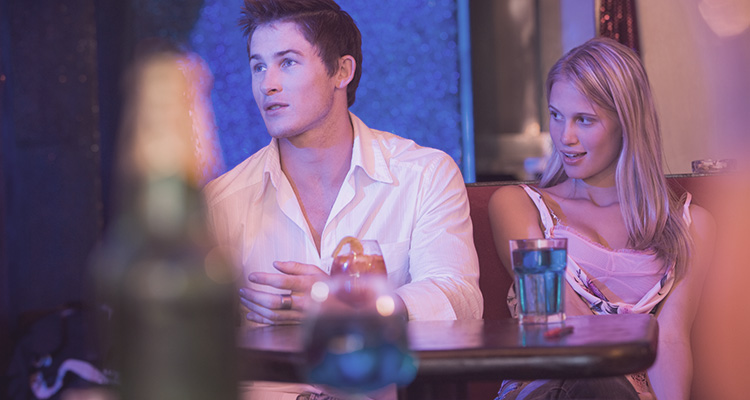
So why do some men smell irresistible?
In 1995 a classic study carried out by Claus Wedekind, (then at the University of Bern), asked women to smell some unwashed T-shirts – each of which had been worn for two nights by different men – and to choose the ones they found most ‘pleasant’. The women consistently preferred the smell of men whose genes for immunity were different from their own. When a man and a woman have different immune systems, their children have better resistance to disease and are therefore potentially healthier. So, outside of women’s conscious awareness, these sweaty T-shirts were providing surprisingly useful information about men’s suitability as reproductive partners. The only exception were women who were taking the contraceptive pill – they chose men whose genes for immunity were closest to their own. As a result, some researchers have asked whether women may get a shock when they come off the pill and no longer find their partner so attractive!
A further sweaty T-shirt study in 2002 painted an even more complex picture. Dr Martha McClintock (an expert on human pheromones from the University of Chicago) and her team found that women preferred the smell of men whose genetic make up was generally different from theirs BUT who shared a few of their genes… specifically MHC genes, which determine aspects of our immune system and are linked to our natural odour. The women had inherited these genes from their own fathers – so they were effectively choosing men who smelled like their fathers because they shared some of his genes. I found this a little disturbing at first, until I remembered these women probably weren’t consciously aware that the smell of the T-shirts reminded them of their father.

However, some women were aware that the body odours they found most attractive reminded them of their present or former partners (presumably not all happy memories). Have you ever been attracted to a guy then realized he smelled like an ex-boyfriend who you used to find irresistible? Maybe they shared some genetic similarities? Maybe you were just hankering after a lost love? Or could it be that both men reminded you of your father?
McClintock believed that, from a reproductive perspective, it makes sense for a woman to choose a guy who’s not a close relative but has some similar genes to her father. This way her offspring get a tried and tested immune system plus a range of different genes that will give them additional immunity. There’s still plenty of debate and controversy in this field. But it seems pretty clear that choosing a compatible male from his smell would have provided evolutionary benefits for women over thousands of years – when having healthy children was most women’s number one purpose in life. But surely there has to be more to choosing the right guy than genetic compatibility…
When it comes to choosing a partner, do YOU really want to be controlled by unconscious biological drivers?
I certainly don’t! After reading the research in this area I became even more aware of the risks of giving in to ‘animal attraction’ when it comes to choosing men.
And now for another unconscious factor that can get make us choose the ‘wrong’ guy, with potentially dangerous consequences…
2. Bowled over by his masculinity
How important is physical appearance to you? Are there certain physical types that appeal, while others make you swipe left or turn your back without a moment’s thought? And would you say you have unique taste in men or are you drawn to the kind of guy most women find attractive?
Some women argue there’s no standard definition of ‘attractiveness’, believing we’re all different and beauty is in the eye of the beholder. But if you share this view you may need to think again… when researchers ask women from around the world to rate men’s attractiveness based on their photographs alone, the results show high levels of consistency. Most agree about who’s attractive – choosing guys with a symmetrical face and body, classic (rather than unusual or distinctive) facial features and masculine characteristics such as a strong jawline.
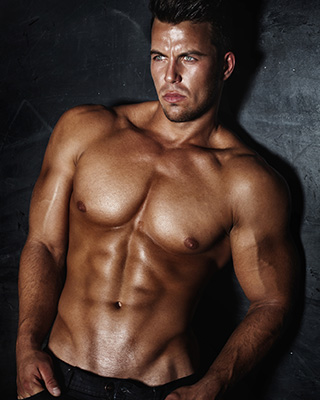
So why do we perceive the most masculine guys as more attractive?
This seems to be another inbuilt, biological preference rather than something we learn just from social conditioning (or social media!). Those classic masculine features that make so many women swoon, (pronounced jawline, brow line and cheekbones, a broad forehead, facial hair etc), start to develop when boys experience a surge of testosterone in adolescence. And, on average, women find men with higher levels of testosterone more attractive than men with lower levels. This may be because a more pronounced, masculine appearance suggests a guy who can protect a woman and look after her offspring – which would have been especially useful to our ancestors, when there were lots of physical dangers lurking outside the cave and wild animals to be hunted.
Some researchers suggest that masculine facial features, are rather like a peacock’s tail in evolutionary terms, advertising a mate with good ‘breeding potential’. Not everyone agrees with this theory and I must say I find it rather tenuous… especially as there are some indications that peaHENS aren’t necessarily that bothered by the size of the tail, as long as it’s good enough to do the job!
An appearance of masculinity can also signal dominance and status which, for thousands of years, enabled men to protect their families and ensure the survival of their offspring. So women who teamed up with dominant men had an evolutionary advantage. This may be another reason why we’re pre-programmed to go for that masculine look, even though many of us are no longer dependent on men for financial support or status in society.

So if you’re irresistibly drawn to dominant and very masculine guys with chiseled jaws and a five o’clock shadow, it could be down to thousands of years of biological conditioning, compelling you to choose a mate simply because he’ll be a strong father for your offspring. But as a twenty-first century woman is that really what matters most to you? It’s time to ask the question:
Do classically attractive, very masculine guys make better relationship partners?
That very much depends on what’s important to you in your relationship, which takes us back to those questions I asked you earlier. If you’re looking for a strong, dominant guy with good genes, who can protect you and your future children from harm and looks like he can handle himself when things kick off, he could be the man you need. And if you need a guy who throws you over his shoulder and carries you off to the bedroom, then he could be an attractive option.
But is there a downside?
There’s no shortage of research to help us answer this question. For example Gillian Rhoades and her colleagues from the University of Western Australia studied a large sample of adult males and found that men whose faces and physique were more attractive had more short-term sexual partners than their peers, but didn’t have more long-term relationships. In particular, men who had classic (rather than distinctive) facial features tended to have more short-term partners and also had more sex with people other than their partner. And in various studies, more masculine men also reporteda greater preference for casual relationships than their more ‘feminine’ counterparts.
These findings didn’t surprise me… rather they confirmed the impression I’ve formed over many years, both in my work as a professional psychologist and through my own personal experience of good looking guys, pumped up on natural testosterone, who didn’t stick around for long before moving on to their next conquest.

Some studies have suggested that, where women are afraid for their safety outside the home, for example due to high crime rates, they tend to be attracted to more masculine men who they hope can protect them. But…
What if the threat comes from inside the home?
In the 1990s a compelling, large-scale study by Alan Booth and James M. Dabbs Jr (Pennsylvania State University) investigated the marriages of a large number of men who had higher than average levels of testosterone. They discovered these men were less likely to marry and more likely to get divorced. And, once married, they were more likely to leave the marital home due to problems in the relationship, extra-marital sex, hitting or throwing things at their wife or ‘experiencing a lower quality of marital interaction’.
We might hope the world had moved on since the 1990s. However, in 2013 the World Health Organisation (WHO) published a comprehensive study, ‘Global and Regional Estimates of Violence Against Women’, which stated:
“Almost one third (30%) of women who have been in a relationship report that they have experienced some form of physical and/or sexual violence by their intimate partner (or ex partner) in their lifetime”.
For the purposes of this study, the WHO defined ‘intimate partner violence’ as:
“Behaviour … that causes physical, sexual or psychological harm, including physical aggression, sexual coercion, psychological abuse and controlling behaviours”.
While there were clear regional differences, estimated rates of intimate partner violence were shockingly high in all regions, (ranging from 23.2% in high-income countries to 37.7% in South-East Asia). These figures matched the results of a European Union Survey on violence against women in 2014, which found that 22% of women had experienced physical and/or sexual violence by a partner since the age of 15. In both studies the figures probably underestimate the size of the problem due to the many pressures on women not to report (or even recognise) such abuse.
Intimate partner violence and abuse take a heavy toll on women’s physical and mental health. They can lead to depression, post-traumatic stress and other anxiety disorders, sleep difficulties, eating disorders, and suicide attempts. For example, the 2013 study found that women who experienced violence at the hands of a partner or ex partner were almost twice as likely to experience depression and problem drinking.

So when choosing a partner we must keep our eyes open in order to minimise the risk of physical or psychological aggression or abuse.
While I was researching this article, I came across an encouraging study carried out by Martha Lucia Borras-Guevara, and her colleagues in 2017, which suggested that women find very masculine guys less attractive when the risk of domestic violence is on their mind.
The study was carried out in Colombia and found that women who feared violence towards themselves or their children in the home were significantly less attracted to men who had more masculine facial features. This wasn’t necessarily a conscious choice – they were just instinctively drawn to men whose more feminine facial features suggested that they would be warmer, more co-operative, less dominant… and potentially better parents. They picked up subtle cues of masculinity and perceived these men as less appealing and trustworthy.
Masculine men across many cultures describe themselves as more aggressive than more feminine men do, so screening out very masculine (macho) guys clearly makes sense for women who are at risk for domestic violence. But actually, unless she needs protection from a high level of physical threat outside the home…
Why would any woman want a potentially aggressive guy in her life?
Of course I’m not alleging that all masculine guys are aggressive, and they’re certainly not all violent. I just wish that every woman would pay attention to subtle cues that might hint at aggressive tendencies in a potential partner… and give those men a wide berth.
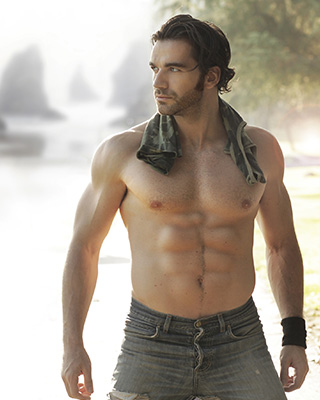
Choosing a partner is complicated and every man is unique but, years of reading research, working with broken-hearted clients and learning the lessons from my own disastrous relationships have led me to conclude that choosing an extremely fit, classically handsome and very masculine (macho) man is probably lowering your odds of having a harmonious, committed, loving, long-term relationship. And you could even be increasing the probability of experiencing infidelity, aggression, domination or control from your partner.
Of course the decision is yours. The important thing is to become consciously aware of what you’re looking for in a relationship and why, and then make sure you make deliberate, rational choices that reflect your priorities… rather than being a slave to your biological instincts. PART 4 of my online programme, unbreakyourheart provides you with an in-depth, interactive process to help you do just that.
And now for a third unconscious factor that can make us choose the ‘wrong’ guy – the last one we’ll look at in this article and one that many women with a history of difficult relationships will recognise…
3. Falling for guys who treat you mean
There’s no denying that self-confidence is a very appealing quality in a potential partner. Even for those of us who have a strong character and are more than capable of taking care of ourselves, there’s something very attractive about a man who knows his own mind, can easily get served in a bar and is relaxed walking into a party where he doesn’t know anyone.
When that self-confidence arises from good self-esteem, it’s a wonderful thing. A guy who’s comfortable and secure in his own skin has great potential if you’re looking for a healthy long-term relationship.
Unfortunately, some women are attracted to guys who they perceive as self-confident – but who are actually arrogant, narcissistic or psychologically unavailable… and who often have a fragile or damaged ego. Here are a few examples, have you ever encountered any of them?
- The guy who’s superficially charming but selfish and egocentric, so the relationship can only ever be about him, while your needs are ignored
- The guy who appears to love himself too much and spends far more time looking in the mirror and taking selfies than paying attention to you
- The guy whose addiction (to alcohol, drugs, gaming, exercise, work or whatever) means you can never be the biggest love in his life so he always puts you second
- The guy who’s unavailable – who says, “I’m not sure what I’m doing next week, I’ll call you”, so you’re always left wondering if you’ll see him again
- And perhaps most confusing of all, the guy who blows hot and cold – one day he’s keen, the next day he can’t wait to get away
There’s plenty more information about these and other Heartbreakers in the first part of my online programme unbreakyourheart- where you’ll also find interactive questionnaires to identify the types of Heartbreaker YOU can’t resist and exercises to help you work out where you’ve been going wrong in your relationships.
You can access PART 1: THE HEARTBREAKERS – WHAT’S YOUR TYPE? for free right now by clicking here: START PART 1 FOR FREE
During the free and single years after my second divorce, while I was developing this online programme, I spent lots of time in a buzzing salsa club, observing the magnetic charm of guys who treated women badly… and the women who found them irresistible. The cooler and meaner the guys were, the harder those women tried to win them over, while the warm, kind, attentive, respectful guys who knew how to listen were left in the shadows or viewed by the women as “just good friends” (a phrase that deflates the ego of even the most secure man). And, I have to confess, I wasn’t immune to the charms of those Heartbreakers either.
You can read more about what I learned in the ‘Salsa Lab’, (both professionally and personally) in Chapter 5 of my ebook.
I was especially interested in the women who didn’t find these mean guys irresistible – who enjoyed dancing with them, maybe even flirted with them… but didn’t fall under their spell. These were also the women who spotted the potential in the good guys – snapping them up, smartening up their image… and making the rest of us envious when we realised what we’d missed. So what’s the difference?
Why do some women make healthy relationship choices, while others find the ‘wrong’ guys irresistible and miss out on love?
When a woman gets turned off by nice guys and is only attracted to men who treat her mean, it usually means she doesn’t value herself enough and isn’t used to feeling cherished… and that’s a pattern that probably started long ago.
If you’ve read this far, is it because you’ve been picking the wrong guys and maybe getting your heart broken as a result? If so, why not take some time to reflect on your earliest relationships… with your parents (or parent figures) and other close family members when you were a child.

Here are some questions to start you off. If you don’t feel comfortable thinking about them or they bring up some strong emotions – or if you don’t remember anything about your childhood, good or bad – you might have some work to do on yourself. I’ll explain what I mean by that in a little while:
- How special did you feel when you were a child?
- Did your parents/parent figures make you feel fine just the way you were or did you sense they’d like you to be different?
- Did you have to try hard/jump through hoops to win their approval and love?
- How did they react when you got things wrong? Were they pretty relaxed, maybe talking about it for a bit then letting it go? Or did they give you a hard time, make you feel bad about yourself or give you the silent treatment?
- How good were they at making you feel safe and secure and calming you down when you were upset?
- How much time did they spend with you and how much attention did they give you?
- How much time or energy did you have to spend on taking care of them and meeting their emotional needs?
- Were they affectionate, warm and close or quite cool and distant with you?
- Did you have the underlying certainty that they loved you most or all of the time?
So what do your answers tell you? And how do you feel about your responses? Were your replies different depending on which parent/parent figure you were thinking about or were they pretty similar? And what does all this have to do with your adult relationship choices? Well, to put it simply:
Your earliest relationships – especially those with your parents or parent figures – set the pattern for your later romantic relationships
For example, there’s a huge body of psychological research that shows the importance of how our parents (or parent figures) respond when we feel distressed in the first few years of our life. If our parents, especially our mother or mother figure, enable us to calm down and feel safe right away – then we learn to deal with our own difficult emotions, feel ‘comfortable in our own skin’ and expect our close relationships to make us feel good. And if those key adults represent a secure base from which to explore the world around us, this gives us confidence that the world is basically a good place and we can be effective within it. All of this bodes well for our adult relationships.
On the other hand, if our parents are unavailable or unable to make us feel safe and secure or they resist our appeals for their help… or else they’re unpredictable and inconsistent in meeting our needs, then we’re more likely to grow up without this inner security and confidence and this can cause problems in our adult relationships. In PART 2 of my online programme, unbreakyourheart, you can read more about this and other research and fill in the interactive questionnaires that will help you analyse your past and understand the implications for you and your relationships. To find out more click here.
Often we internalise our parents’ perceptions of us and they become our self-perceptions. The things we say to and about ourselves are often the things they said to us when we were small. So if your parents told you that you were smart, adorable, funny or capable of doing anything then you probably believed them at the time… and found them to be largely true as you grew up. That’s the power of self-fulfilling prophecies.
But what if one or more of the people you were closest to as you were growing up called you irritating, stupid, clumsy, timid, ugly, clingy or useless? Unless you had other people in your life who could counter their opinion, you could have internalised those labels and may have been struggling to get past them ever since.
So from our earliest encounters we learn what the world is like and what to expect from our close relationships, assuming what happens is ‘normal’ because we don’t know any different. That ‘normality’ typically becomes the benchmark that we use to evaluate our experiences all the way into adulthood… including how our partners behave towards us. We ask ourselves, ‘Does this feel normal to me?’ and if the answer is ‘Yes’ then we do our best to deal with it… even if it’s painful, hurtful, disrespectful, neglectful or unloving.
And, unless we make a big effort to change, those early relationships form the template that we unconsciously use when choosing our future partners.
When we meet a guy who makes us FEEL the way our close family members, especially our parents, made us feel… we’re instinctively drawn to him (or instinctively repelled by him). This isn’t a rational, conscious choice about whether he’ll be a good partner but an automatic reaction caused by our earliest experiences, which we may not even consciously remember. And often we call it…
CHEMISTRY!!!
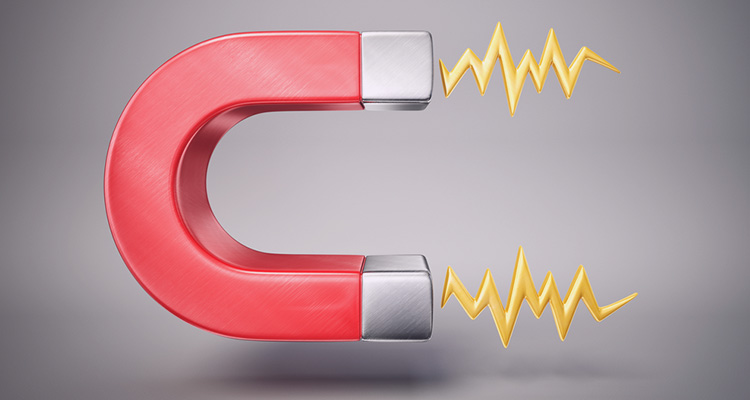
Phrases like, ‘love at first sight’ or ‘instant attraction’ can sometimes (but not always) be a clue. So if you’re magnetically drawn to a guy and find him irresistible it’s important to stop and work out whether it’s because:
- (a) He’s a great guy who’s just right for you and worth snapping up immediately… or
- (b) He reminds you of someone who was very significant to you in childhood.
And if the answer is (b) and your relationship with that person wasn’t great, then you need to be VERY cautious. Because these are often the relationships that break your heart… and they can also be difficult to end. There’s more about this in my blog post: Stuck in a painful relationship? Why do we stay when we know we should leave?
So if you keep having relationships that, sooner or later, make you feel bad, the root of the problem is probably in your distant past… and that’s where you need to focus if you want to fix it.
My online programme unbreakyourheart offers an in-depth process to help you do just that. You’ll find:
- Original content which I’ve drawn from published psychological research and developed over twenty five years as a professional psychologist
- Interactive questionnaires and exercises to help you analyse WHY you find the ‘wrong’ guys irresistible, where you’re going wrong and WHAT you need to put right
- Downloadable tools and resources to help you fix yourself and find love… including
- Special techniques to help you work with your unconscious mind, which is so much quicker, more comfortable and more effective than trying to change by will power alone.
- And lots more
So why not START PART 1 FOR FREE right now?
For years I found the wrong guys irresistible… but after I’d worked through the unbreakyourheart process, they lost their appeal completely. And it was only when I got into a happy, healthy relationship with Antonio – a really decent, wonderful loving man – that I realised quite how awful my relationships used to be… and what I’d been missing all those years.
A very real example
A long time ago I remember lying in bed, in pain after a pretty harrowing two-hour procedure at the dentist. I’d slept all afternoon and wanted to take a painkiller, but I knew I should eat something first. Three times I asked my long-term partner at the time to heat up a can of soup for me and after his third, “in a minute” I dragged myself out of bed and did it myself.
When I recounted this episode to Antonio he was shocked. As I’m writing this, he’s putting the finishing touches on a wonderful paella. He invents a new recipe for me every few weeks because he knows how much I enjoy it. It’s not just the great flavour that makes this so special for me – it’s the love he puts into his creations because he wants to make me happy.

You can read about how I broke my pattern of disastrous relationships with the wrong guys and FINALLY found love with the right man in my EBOOK. And you can find out more about how YOU can unbreakyourheart and get ready for love here.
If you’ve been having a hard time with the wrong guys I hope you’ll come and join me so I can help you break with the past… because every woman deserves a genuine, loving relationship that makes her happy.