More dysfunctional relationship patterns

Here are some examples of women who keep reliving old dramas in their adult relationships. The details of each story are different, but the roots of the problem always lie in the past… starting in childhood. That’s why these women first needed to work out the connection between their present and their past as the first step in breaking out of their old patterns.
Observing other women’s dysfunctional relationship patterns from the outside can often help us recognise what’s happening inside our own. So as you read their stories, think about whether anything similar has been happening in your relalationships.
Don’t fence me in

Michelle was looking hard for love and dedicated a lot of time and energy to dating. She was very clear about the kind of man she was looking for, so she preferred dating sites that offered detailed profiles. She studied them carefully and screened out anyone who didn’t match her requirements.
Her top priority was to find a man who was alternative and original – she couldn’t bear guys who were ‘normal’ and thought she’d die of boredom with someone who had a traditional lifestyle and only aspired to a mortgage, a family and the next promotion at work. She was especially drawn to guys who described themselves as ‘creative’, ‘artistic’, ‘individual’ or ‘a free spirit’.
She had no problem getting dates because she’s attractive and she’d refined her profile to appeal to the kind of man she wanted. So, when she contacted guys, most of them responded positively and she was usually chatting to several at once. The first few weeks often went really well. She made a great first impression and those creative guys didn’t disappoint, taking her on unusual dates/ writing her poetry/ serenading her on Facetime and always talking about all the exciting things they’d do together.
After that the problems started:
- Sometimes she noticed they were recycling the same old ideas and opinions, and realised they weren’t not so original after all.
- Sometimes she got frustrated because struggling artists and unemployed anarchists never had any cash, which limited the things they could do together unless she paid every time.
- And often the guys would cool off and say they wanted to carry on dating other people. When she objected they’d say things like, “Don’t try to tie me down” or “You know I get bored easily, it’s in my profile”.
Usually she ended up getting angry and there’d be a huge argument, which ended with her stomping out of a bar or throwing them out of her apartment in the middle of the night. Or else the guy would get wrapped up in a new creative project/ woman and disappear off the scene without a backward glance.
For a long time Michelle didn’t recognise she had a dysfunctional relationship pattern. She thought each of the guys had something wrong with him and it was just a question of time before she found the right one. But, after several promising relationships went sour in quick succession, she took a break from dating to analyse what was going wrong.
Eventually she had a light-bulb moment… the kind of man she found attractive couldn’t deliver any of the things she really needed in a partner. Choosing men who loved freedom and then trying to tame them into the confines of a standard relationship, meant she was doomed to failure.
And as she analysed her past it became clear where this pattern started. Michelle’s father was a musician who never settled into conventional life. His work was irregular and badly paid, so his wife was the breadwinner throughout Michelle’s childhood. He used to go away ‘working’ for weeks or months at a time, with very little to show for it on his return. And he got so irritated when Michelle asked about his trips that she eventually stopped… but she was left with the impression he was having an exciting time. (With hindsight she was sure there were lots of other women in his life and that’s why her mother locked him out of the family home on a regular basis.)
Michelle loved her free-spirited father. His life always seemed so glamorous when she was growing up and he was so much more entertaining than her mother, who was always tired and stressed. That’s why she’d been looking for a man who was just like him. But the guys she dated could never live up to the fantasy she’d created… and when she realised their shortcomings, she felt let down.
What’s more, the guys who were most like her father also shared his defects – they were penniless, wrapped up in their own world and, worst of all, she couldn’t keep them close or get them to commit to her. That’s what triggered her anger and made her throw the guys out… just as she’d seen her mother do to her father on numerous occasions when she was growing up.
So our Emotional Baggage often leads us to make some bizarre choices. Have you ever found someone you believed to be your ‘ideal man’ – either online or in person – only to discover that he might be what you thought you wanted but he definitely wasn’t what you needed to make you happy? In PART 4: YOUR RELATIONSHIP WISHLIST we have a process to help you define what you really need in a relationship partner, so you don’t have to make this mistake.
In PART 4 we’ll also look closely at how you can spot the early warning signs that a relationship isn’t right for you. Often, when we look back to the start of a relationship – sometimes even the first few moments of knowing a guy – we realise the red flags were there from the start but we chose to ignore them, as in the next example…
Me, me, me

A little earlier, when we were looking at women who put up with bad treatment in their relationships, I mentioned Johanna who had been going through a terrible year. She’d just lost her mother, there was a huge family conflict going on and she had some worrying health issues. Toby, her partner of five years, gave her very little support. He didn’t go with her to her medical appointments because he didn’t feel he had ‘anything to contribute’ and he left her to confront her warring family alone. Worst of all he actually criticised her for ‘going on’ about her problems and neglecting him. But instead of being disgusted at his attitude, Johanna blamed herself and agreed that she should try to handle her problems alone.
Shortly afterwards Toby ended the relationship suddenly, blaming Johanna for the break up because she was ‘draining his energy’ with her problems. She was devastated and wondered, at first, if there was any way she could get him back. But as she reflected on the relationship, she started to recognise how much he’d let her down. Their relationship had always been about his needs… and things only started to unravel between them when she was so overwhelmed by her own problems that she couldn’t dedicate all her time to him.
It went all the way back to their first ‘date’. Toby had asked Johanna out for a drink but on the way they’d called in at the optician – where he had an eye test and she helped him choose some frames for his new glasses – then he’d left her waiting in the car for half an hour while he popped into work to pick something up. They spent their second ‘date’ at a trade fair where he talked shop for hours with potential customers and left her looking on in silence. To make it up to her, he took her to the cinema – where it was ‘Two-For-One Tuesday’… and HE chose the movie (which she had no interest in!). With hindsight, she realised the writing was on the wall from the very beginning.
Johanna was shocked when she looked back over her two previous relationships and realised they had also been one-sided, with self-centred men who had the relationships totally on their terms, absorbed all her energy and made her feel guilty if she took some time for herself.
Everything fell into place when Johanna thought about her own parents… Her father was a self-centred and domineering man who had been an over-indulged only child. When he got married, he insisted that his wife give up work and stay at home to look after the house and take good care of him. Johanna’s mother was a quiet, unassertive woman who put her husband’s needs ahead of her children’s and only had eyes for him. She tried to anticipate his every need and spent her evenings listening as he read out articles from the newspaper, while the children were left to their own devices.
Johanna realised she had spent her adult life repeating her childhood – looking after self-absorbed men like her father – and she had completely lost herself. That’s why she felt guilty when her ex criticised her for talking about her problems… and why she put up with selfish men for so long without realising how dysfunctional these relationships were.
So when we’re caught up in dysfunctional relationship patterns it’s often because we can’t resist men who unconsciously remind us of important relationships from childhood, even when those relationships made us – and the people around us – unhappy. Here’s another example:
How can I walk away when he needs me?

Grace’s mother suffered from severe depression. Grace’s earliest memories were of her mother lying in bed all day with the curtains closed while she and her brother were looked after by neighbours. Later her mother attempted suicide several times. This left Grace permanently worried about what she would encounter when she came home.
In Grace’s first year at university her boyfriend also suffered from depression. The first time she called at his room mid-afternoon and found him face down on the bed fast asleep with the curtains closed, her heart lurched. His low moods really distressed her and she was desperate to help. For almost a year she supported him emotionally and tried to help him get through his exams. But the pressure was too much for him. When he dropped out and went back to live with his parents, Grace felt guilty that she hadn’t been able to do more.
After being single for a few months she started seeing Ged. He was the complete opposite of her ex – full of energy and exciting ideas. She soon realised he could be incredibly intense and sometimes his restlessness and inability to sleep could be exhausting. She put it down to his cocaine use.
They hadn’t been together long when things changed. He wasn’t answering her calls or messages one weekend so she eventually went round to his place and found him so low and exhausted that he could hardly move or speak. In tears he told her to leave because he was useless and he didn’t see the point of her spending any more time with him.
Grace was shocked by this dramatic change. She knew he’d been drinking and using cocaine a lot and thought maybe he just needed time out to sleep things off and get back on an even keel. But his low mood continued and she soon realised he was having a depressive episode. She spent all of her free time with him, making sure he was OK.
After weeks of persuasion he finally agreed to see a doctor and she took him to the college medical centre. He was initially diagnosed with depression and given medication which helped for a while. But pretty soon he started using cocaine again and his moods became erratic and unpredictable. He started having suicidal thoughts and she was really nervous when she had to leave him alone to go to her classes. Eventually he was diagnosed with bipolar disorder.
The rest of Grace’s time at university was pretty much dedicated to helping Ged stay on an even keel and her studies suffered because she found it hard to concentrate. Her brother worried about her, and wanted her to end the relationship or at least back off a bit. But Grace said she wouldn’t dream of it – how could she leave Ged to cope with this alone?
Of course, Grace never wanted to repeat this dysfunctional relationship pattern. She didn’t intentionally create these situations that reminded her of her difficult childhood and she certainly didn’t consciously choose boyfriends who had mental health issues. But when she thought back to the start of each relationship, she recognised there had been early warning signs that might have caused other women to back off… Grace brushed these red flags aside because they felt ‘normal’ due to her experiences early in life.
Adults who feel compelled to take care of (rescue) other people often had the burden of being carers in childhood – for example because one or both parents had physical or mental health issues, addictions or other problems that made them needy or dependent in some way. It’s no coincidence when we carry this pattern of caring into our adult relationships, as Grace did.
As I mentioned when we looked at unhelpful expectations and beliefs, caring for other people is a fine thing, but if it’s a compulsion rather than a choice and if you’re losing yourself in the process, then it’s not healthy. So if you keep getting into relationships with individuals who have serious issues that make them dependent on your support and able to give you very little in return, this could indicate that you have some Emotional Baggage to clear out. A little later in PART 2 I’ll explain how you might do that.
And now for one last example. This shows what can happen when our desperation NOT to repeat a painful experience from the past traps us in a dysfunctional relationship pattern that robs us of the chance of happiness.
Not worth the risk of falling in love
Stacey had a lot of ‘boyfriends’, but there’d never been anyone she could introduce to her family. For years she had a thing going on with Dean, her boss at work, but he was married with children so she had to keep that one quiet. Aidan, the DJ, came and went but she always had fun with him while he was in town over the winter months. And she’d stayed in touch with Shane who she dated casually at school – but they were really just friends-with-benefits who occasionally went away on a last-minute holiday when he wasn’t seeing anyone. In between there were flings – the guy who came to fit her kitchen, someone from her kick-boxing class, a cute young guy who worked in her local bar etc, etc.
Her family had no idea about her private life and Stacey liked to keep it that way, but it didn’t stop them going on about it. She was thirty-four and they wondered if she’d ever settle down. Her older sister, Kelly, got married to Adrian and had two kids while she was in her twenties, and her mum wished Stacey could meet someone nice too. Stacey didn’t tell her she’d rather jump off a tall building than settle down with someone like Adrian.
But beneath the bravado, Stacey was worried she’d end up alone. This had been on her mind a lot recently, since Shane met someone he reckoned could be the love of his life. In a way she envied him.
So recently she let a friend persuade her to go to a speed-dating event. It wasn’t as bad as she expected and there were a couple of guys she agreed to see again. They were OK looking and seemed nice enough. One was a teacher and the other was a pharmacist so she knew her Mum would approve! She arranged to meet up with both of them the following week. But as the dates grew closer she felt increasingly on edge and panicky, so she ended up sending them both a message saying she couldn’t make it. She had no idea why the idea of dating a ‘regular guy’ filled her with terror…. but her reaction really bothered her so she decided to try to work it out.
After analysing her relationship history, Stacey eventually realised that she had a recurring pattern of choosing guys who just weren’t ‘relationship material’. They were either unavailable (because they were in a relationship or working away) or unsuitable… or obviously just a fling. So why was she repeating this pattern that was pretty much guaranteed to keep her single? And why did the possibility of a serious relationship with a suitable guy terrify her?
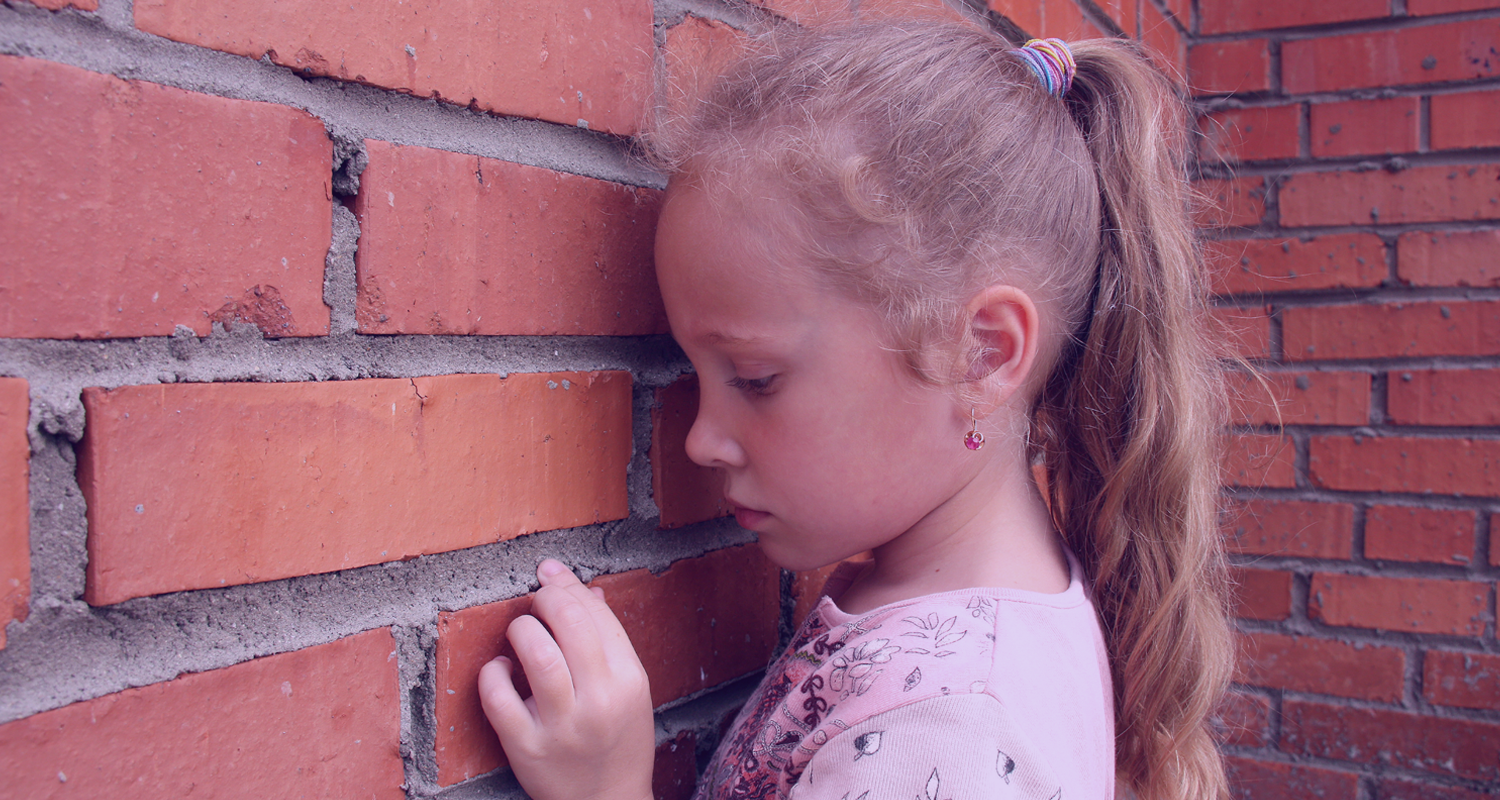
The answer went all the way back to her early childhood when Stacey lost her father to a terminal illness when she was only six years old. She had been very close to him and his death was quite sudden. Nobody explained to her what was happening at the time, she was just aware of a lot of people crying and she didn’t understand why. Then her Dad wasn’t at home any more.
They didn’t let her visit him in hospital until the very end and then he didn’t look like her father at all. And she wasn’t allowed to go to the funeral because her grandmother said she was too young and it would upset her – so she was sent away to stay with a friend for two weeks. When she got home, all trace of her father had been removed from the house and her mother refused to talk about him. Stacey was told she had to be brave and get on with normal life. So that’s what she did – though she cried herself to sleep quietly every night for months.
This intense and sudden loss, which she wasn’t allowed to talk about or openly grieve for, left the six-year-old Stacey with a profound sadness and the unhelpful expectation that she’d probably lose any man she loved. That’s why the thought of getting close to any guy was so scary… it felt safer to keep herself at arm’s length by repeating her dysfunctional relationship pattern of casual, unsuitable or long-distance affairs, because she knew from the start they’d never amount to anything.
Somehow it felt better to believe she wasn’t cut out for a serious relationship than to risk getting close and having her heart broken again… even though this faulty strategy was preventing her finding a loving relationship.
So, four very different women, suffering in different ways, but with one very important thing in common… they all lived through painful experiences in childhood, which they weren’t able to make sense of and deal with effectively at the time. Their dysfunctional relationships in adulthood seemed normal – even appealing – because they reminded these women of childhood. That’s why they kept on making the same ‘bad’ choices in their relationships. And the more often they repeated these dysfunctional relationship patterns, the more entrenched they became.
Does anything about their stories strike a chord with you?