Warning: Undefined array key "type" in /home/uyh/public_html/wp-content/plugins/affspider/modules/uyh/hooks.php on line 143
PART 2: WHY, WHY, WHY? #2 PAINFUL CHILDHOOD EXPERIENCES
#2.4 What makes some of us especially vulnerable to our childhood experiences?
To answer this ‘WHY ME?’ question, let’s go back to what we learned earlier in PART 2 about being born sensitive. Children vary greatly in how much they are affected by difficult or adverse circumstances while they’re happening. And those of us who are born sensitive seem to feel the effects more deeply at the time and potentially suffer greater long-term consequences than our ‘thicker-skinned’ siblings.
Encouragingly, sensitive children achieve especially positive outcomes when they grow up in a supportive and relatively problem-free environment. Some developmental psychologists call this ‘Differential Susceptibility’ and it seems to have a strong genetic component. In other words, some children seem to be born more susceptible to their life experiences than others.
Let’s look at just a few examples of the extensive research that has been done in this field and then we’ll explore what it might mean for our relationships.
Here’s the hover-over text:?Elaine N. Aron (1999) ‘The Highly Sensitive Person: How to Survive and Thrive When the World Overwhelms You’Elaine and Arthur Aron at the State University of New York at Stony Brook
I first came across the term ‘Differential Susceptibility’ when reading the work of Elaine Aron (which I described earlier in PART 2 when we were looking at what it means to be born sensitive).
While describing their research into the relationship between sensitivity, introversion and emotionality, Dr Aron and her husband Arthur set the scene by observing that, if highly sensitive children have a difficult childhood and parenting that doesn’t meet their needs, they’re more likely to be affected by it, whereas, less sensitive individuals tend to be far less affected, even by extremely problematic childhoods. This matched my own experience and observations.
However, I was surprised and encouraged by their finding that sensitive individuals whose home environment does give them the support they need to deal with their feelings are usually able to avoid becoming shy or self-conscious, are often more than averagely successful in their lives and are able to turn their sensitivity into an asset.
Jay Belsky, Child Psychologist, Professor of Human Development at the University of California
Dr Belsky is an internationally recognised expert in the field of child development and parenting. His influential research on Differential Susceptibility includes observing how family members interact naturally, in their home environment.
A fascinating Jay Belsky and Michael Pluess (2009), ‘Beyond Diathesis Stress: Differential Susceptibility to Environmental Influences’, Psychological Bulletin Vol. 135, No. 6, 885–908study he published with colleague Michael Pluess in 2009, showed how some children were more susceptible to the effects of parenting and child care quality in the first five years of life than others who were more resilient and less affected by how they were treated.
Not only did the susceptible children have more emotional and behavioural problems in response to poor quality care, but they also had fewer problems than average if they received high quality care. In other words, they were more susceptible (or sensitive) not only to negative but also to positive influences in childhood.Belsky seems to be quite a controversial character at times but if you’re interested in the interaction between nature and nurture, his work on Differential Susceptiblity is certainly worth a look and his blog entries in Psychology Today are very readable.
Why are some children so susceptible to the circumstances life throws at them?
1. We’re more aware
Elaine and Arthur Aron’s explanation is that susceptible children are highly sensitive and therefore “more easily overwhelmed by external stimuli”. This means we need particular help dealing with the fears and sadness we experience because we perceive so much that is distressing… things that other children may not notice or think about too much. This view coincides with my own professional experience of working with children and families – including pre-schoolers with special needs – as well as highly sensitive adult clients.
2. It’s in our genes
A number of researchers, (including Belsky and Megan Gunnar whose work is described below), suggest that our genes may make us more vulnerable to our environment – at least in part. For example, according to their research, genes that determine our uptake of important neurotransmitters such as Dopamine is a neurotransmitter (i.e. a chemical that helps to pass messages between cells in our brain and central nervous system), which helps control the brain’s reward & pleasure centres. When we experience, or anticipate something pleasurable (certain foods, drugs, sex etc), the dopamine activity in our brain increases, so dopamine is thought to teach us to associate certain activities with feeling good, so we repeat them. Dopamine also sends signals to our body to get moving – towards anything that could be rewarding.dopamine and Seratonin is an extremely important neurotransmitter (i.e. a chemical that helps to pass messages between cells in our brain and central nervous system). It is thought to regulate our mood. Higher levels contribute to feelings of well-being, calm and happiness; lower levels to depression/anxiety. Among other things, serotonin also has a role in controlling our appetite and sleep patterns and is involved in learning and memory. Several antidepressants are thought to work by adjusting serotonin levels.seratonin, could be making some children more susceptible to their environment.
In other words, at least some of our susceptibility to the impact of early experiences (good or bad) could be down to differences in our central nervous system that are inherited from our parents and present from birth. As Belsky describes it, “some children are simply born SECURE whereas others are made SECURE or insecure… by the quality of rearing they experience.”
As with most important scientific questions, there are many different perspectives on how much of ‘who we are’ is determined by genetics and how much by our environment (known as the the ‘nature versus nurture’ debate).
If you’d like to explore this question further, here is a link to a 2013 article by Jay Belsky that offers further information and an extensive reference list https://link.springer.com/article/10.1007/2288-6729-7-2-15
The importance of secure attachment for susceptible babies
I’m sure it comes as no surprise that one of the key environmental factors that impacts susceptible children is the quality of our relationships with our parents and other caregivers. The way our parents interact with us – in particular, whether or not we develop a strong, SECURE attachment in the first few years of life – makes a huge difference to HOW we experience any adverse circumstances we face and, ultimately, to their long-term impact… as the next example explains
Gunnar, M.R. (1994). Psychoendocrine studies of temperament and stress in early childhood: Expanding current models. In J. E. Bates & T D. Wachs (Eds.), Temperament: Individual differences at the interface of biology and behavior (pp. 175-198). Washington, DC: American Psychological Association.Megan Gunnar, Child Psychologist, Professor of Child Development at the University of Minnesota
Professor Gunnar has spent her career studying how babies and young children respond to stressful situations. She has carried out various studies looking at the impact of early parenting on young children, investigating the key role played by relationships in helping them cope with stressors.
For example, in 1994 she studied how nine month olds babies reacted to new experiences, measuring the chemicals their bodies produced and using them as an indicator of how the babies were feeling.
When sensitive babies were placed in a new situation with an adult who made them feel SECURE, their bodies only produced adrenaline (a hormone connected with feeling startled or excited). However, when they were in a new situation with an adult who was NOT giving them reassurance or with a mother to whom they were NOT securely attached, their bodies also produced cortisol indicating that they felt afraid or threatened.
(Click here if you’d like to refresh your memory about what it means for young children to be ‘securely attached’.
The work of Megan Gunnar (and many other researchers) demonstrates how negative and stressful new experiences can be for sensitive infants who aren’t getting adequate emotional support and security from the important caregivers around them. And of course, just about everything is new (and therefore potentially stressful) in the first few years of a child’s life. No wonder a sensitive child’s relationship with her parents has such a profound impact on her emotional development and wellbeing.
So what are the longer-term consequences for susceptible children who experience prolonged stress and fear in childhood because we’re not getting the right kind of support?
When babies get burnout
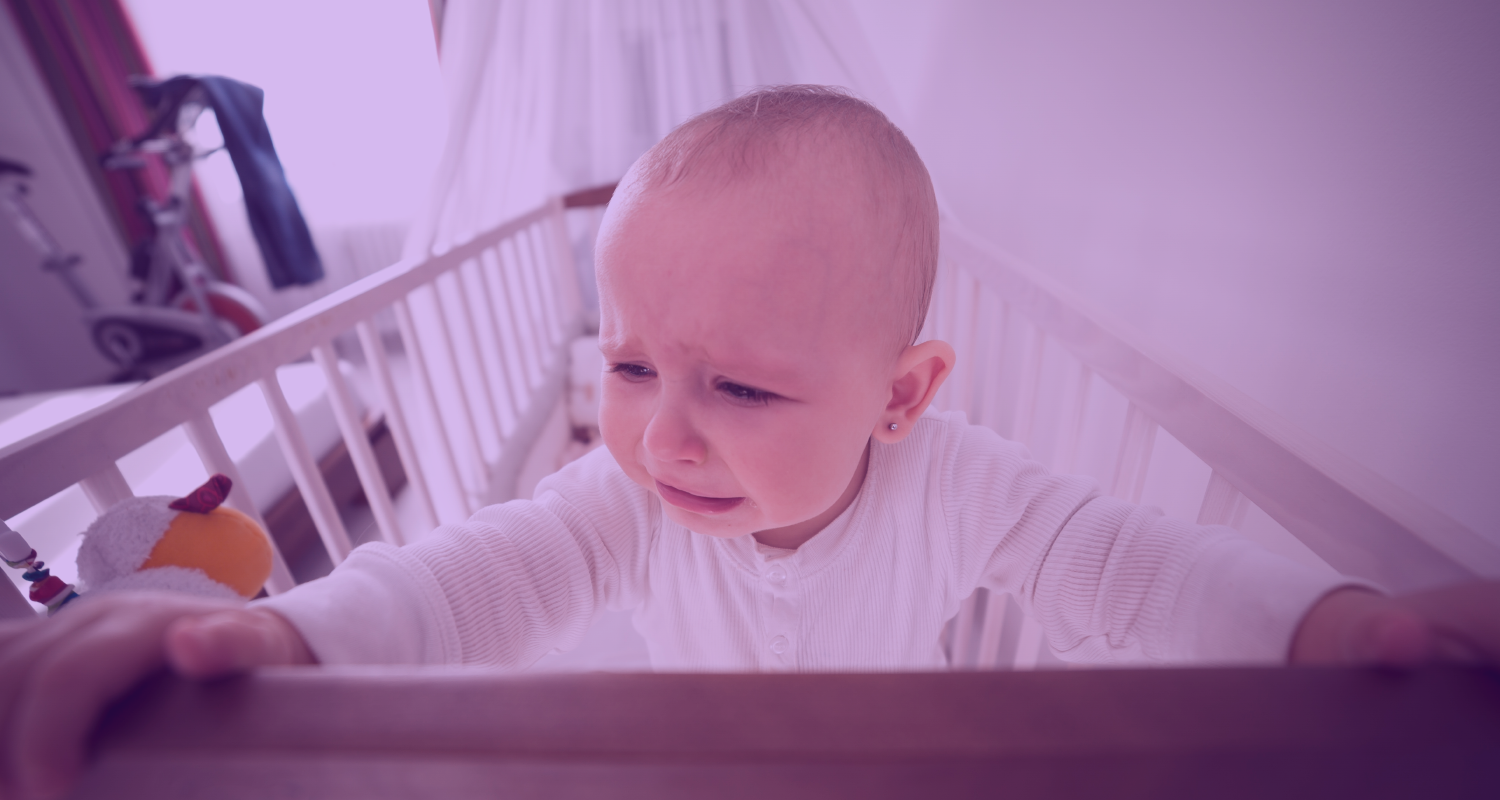
Megan Gunner’s study showed that babies’ bodies produced cortisol – a chemical produced by our adrenal glands – when they were in a new situation without the reassurance they needed, which shows they felt afraid rather than just excited. Cortisol levels vary naturally throughout the day and control a range of normal bodily functions. It has been called “the stress hormone” because it’s secreted in higher levels when we experience something that seems threatening.
Short-term bursts of extra cortisol can enable us to react in a positive way to immediate dangers (e.g. by lowering our sensitivity to pain or giving us a boost of energy to run away or defend ourselves). But if cortisol remains at high levels in our body for a long time, for example because we’re exposed to stressful situations on a prolonged basis, it can have damaging consequences.
As cortisol builds up:
- Our memory and thinking can be impaired
- Our immune system can be affected
- Other hormones and brain chemicals affecting our mood can get out of balance
- Sleep can be disturbed.
And the last two factors can interact to create a vicious cycle. Hormonal imbalance can affect our sleep and, in turn, disturbed sleep over an extended period can affect our hormonal balance, for example reducing levels of the neurotransmitter Seratonin is an extremely important neurotransmitter (i.e. a chemical that helps to pass messages between cells in our brain and central nervous system). It is thought to regulate our mood. Higher levels contribute to feelings of well-being, calm and happiness; lower levels to depression/anxiety. Among other things, serotonin also has a role in controlling our appetite and sleep patterns and is involved in learning and memory. Several antidepressants are thought to work by adjusting serotonin levels.serotonin, a vital ‘mood control’ chemical in our brain and nervous system, which is implicated in depression and anxiety. Anyone who has suffered from disturbed sleep will know how debilitating it can be… and regular sleep is even more important for young children than it is for us adults.
To give you an idea of how a build-up of cortisol might feel, adults who are suffering from burn out show elevated levels of cortisol. It’s distressing to know that vulnerable babies and young children could be feeling the same way.
But remember, this isn’t inevitable…
 SECURE attachment can protect susceptible infants
A parent or caregiver who provides the right kind of emotional support can enable even the most sensitive child to form a SECURE attachment… and this seems to act almost like an immunisation , protecting the susceptible individual from the potentially damaging impact of stressful events.
So how does childhood susceptibility affect our adult relationships?
If our childhood experiences are difficult and our parents and caregivers can’t give us the support we need, sensitive individuals are more likely to suffer lasting damage, for example to our feelings of self-worth and our confidence in relationships . And this damage can have far-reaching implications – affecting how we behave in our adult relationships and even determining the guys we choose to be with.